Transrectal Ultrasound (TRUS) of the Prostate

Medical Review & Verification: Dr. Niti Navanimitkul, M.D.
Board-Certified Urological Surgeon | Advanced Prostate Diagnostics Specialist | M-Trust Urology Clinic • UroLift Treatment for BPH (100+ cases, 99.99% success rate) • Water Vapor Therapy (Rezūm) - Center of Excellence • Prostate Cancer Screening & Treatment
Last Reviewed: July 2026Accurate prostate volume measurement and structural screening using transrectal high-frequency sound waves.
What is TRUS?
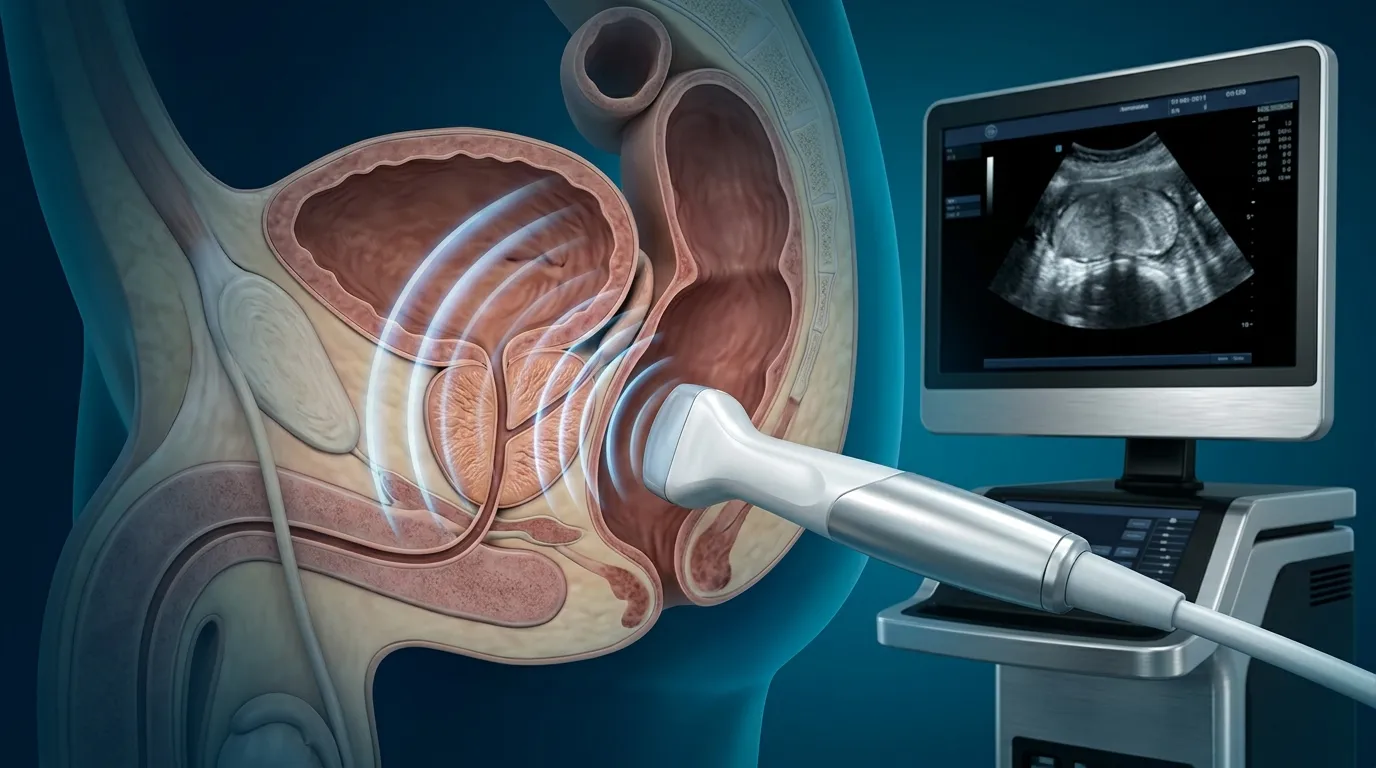
TRUS (Transrectal Ultrasound) is a diagnostic test that utilizes a small lubricated probe inserted into the rectum to create high-resolution images of the prostate gland. Because the prostate lies immediately adjacent to the rectum, this ultrasound technique provides the most detailed and precise assessment of prostate size and architecture, which is critical for planning BPH treatments like UroLift and Rezūm.
Why is a TRUS Ultrasound Performed?
Measure Prostate Size (Volume)
Calculates the exact volume in cubic centimeters (cc) to help the urologist select the optimal BPH treatment option.
Identify Lesions and Nodules
Detects hypoechoic areas within the prostate, which may suggest inflammation or early cancerous developments.
PSA Density Calculation
Correlates prostate size with PSA blood test levels to assess the likelihood of benign enlargement versus malignancy.
What to Expect During the Procedure
1. You will be asked to lie on your side with your knees bent toward your chest.
2. The doctor applies a sterile gel to a probe approximately the size of a finger.
3. The probe is gently inserted into the rectum, causing a mild feeling of pressure but no significant pain.
4. The scan takes only 10-15 minutes, and findings are discussed immediately afterwards.
Related Topics
Clinical References & Sources
- American Urological Association (AUA) Guidelines on Prostate Cancer Early Detection.
- European Association of Urology (EAU) Guidelines on Prostate Cancer Screening.
- National Comprehensive Cancer Network (NCCN) Guidelines for Prostate Cancer Early Detection.